For Americans, Canadians and other international investors considering Panama as a place to retire, invest, relocate or establish a second residence, understanding the country’s residency options is an essential part of the decision-making process. Panama’s immigration framework changed again in September 2026. Executive Decree No. 17, signed September 8, 2026 and published in the Official Gazette on September 16, 2026, introduced important changes to the Qualified Investor Residency Program, particularly for foreigners who want to obtain residency through real estate investment.
One of the most significant changes affects resale properties: purchasing a property on the secondary market under the Qualified Investor Program now requires an investment of US$500,000. For some international buyers, this represents a significant increase in the capital required to use real estate as a pathway to residency. However, the US$500,000 figure should not be interpreted as a universal requirement for anyone who wants to live in Panama. Depending on nationality, financial situation and personal circumstances, the Friendly Nations Visa and residency options based on economic solvency can provide alternative paths for qualifying applicants.
Do You Need $500,000 to Get Residency in Panama?
Not necessarily. Panama has several immigration categories for foreigners, including programs related to Friendly Nations, Qualified Investors, economic solvency, pensioners and retirees, real estate investment, and other specific residency categories. The new US$500,000 threshold applies specifically to certain real estate investments under the Qualified Investor Program, particularly properties purchased on the secondary market. It does not mean that every American, Canadian or other foreigner must invest US$500,000 to become a resident of Panama.
What Changed in Panama’s Qualified Investor Program?
Panama’s Qualified Investor Program was designed to attract foreign capital by offering residency to investors who meet specific investment requirements. Real estate has historically been one of the most popular options, but the rules changed in September 2026. Under the new framework, there is an important distinction between new and resale properties: US$300,000 for certain qualifying first-sale properties, US$500,000 for properties purchased on the secondary market, or a US$500,000 fixed-term deposit for five years in Banco Nacional de Panamá or Caja de Ahorros under the applicable conditions. An investor who was previously considering a US$300,000 resale apartment cannot simply assume that the same property will qualify under the current rules — the type of property and transaction now matter significantly.
Panama Friendly Nations Visa: An Alternative for Americans and Canadians
The Friendly Nations Visa is designed for nationals of countries that have a qualifying relationship with Panama and who meet the applicable requirements. One of the investment-based pathways involves qualifying real estate investment beginning at US$200,000, subject to the applicable immigration requirements. For a North American investor, the difference between US$200,000 and US$500,000 is substantial. Consider someone with a budget of US$250,000 for a home in Panama: if they assume the only way to obtain residency through real estate is the Qualified Investor Program, they may conclude their budget is insufficient — but if they qualify under Friendly Nations, the situation could be different.
Who Can Apply for the Friendly Nations Visa?
The Friendly Nations category is not available to every foreign national. Applicants must be citizens of countries included in the applicable list and must satisfy the other requirements established by Panamanian immigration regulations. For the North American market, United States and Canadian citizens are particularly relevant when evaluating this category, though nationality alone does not guarantee approval. The exact requirements should be verified at the time of application because immigration regulations can change.
Economic Solvency Residency in Panama
Another option worth considering is residency based on economic solvency — relevant to foreigners who have sufficient financial resources but do not necessarily want to invest US$500,000 in a resale property. Panama’s immigration framework includes permanent residency categories based on economic solvency, with modalities involving fixed-term deposits, real estate investment, or a combination of qualifying investments. For certain real estate-based modalities, the investment reference can begin at approximately US$300,000, depending on the specific category and current requirements.
$200,000 vs. $300,000 vs. $500,000: What Is the Difference?
| Residency / Investment Route | Reference Investment | Who May Consider It |
|---|---|---|
| Friendly Nations | From US$200,000 in qualifying real estate | Citizens of eligible countries |
| Economic Solvency | From approximately US$300,000 depending on modality | Applicants with qualifying financial resources |
| Qualified Investor — first sale | US$300,000 under applicable conditions | Investors purchasing qualifying new properties |
| Qualified Investor — resale | US$500,000 | Investors purchasing secondary-market properties |
These amounts should be considered reference investment thresholds, not guarantees of immigration approval. Eligibility depends on the complete requirements of each category, including documentation, source of funds and ownership structure.
What Does This Mean for a U.S. Retiree?
Consider a hypothetical American couple with US$350,000 available for a home who want to relocate to Panama. Their first assumption might be that they need a US$500,000 property to qualify for residency — which could mean spending significantly more of their retirement capital than planned. But if they qualify for another residency category, the money saved could instead remain available for retirement reserves, healthcare expenses, insurance, travel, home improvements or emergency savings. For retirees, residency planning should be considered together with retirement financial planning — see our guide to tax benefits of living and investing in Panama for the broader financial picture.
Panama Residency for Canadian Investors
A Canadian investor may have very different objectives from a retiree or a family relocating permanently — a second home, rental income, geographic diversification or a future relocation option. The appropriate immigration strategy can vary depending on the purpose of the investment. Rather than starting with “Which Panama property should I buy?”, a better starting question is “Which residency category fits my situation?” — the property search can then be structured around that answer.
Panama Residency for Expats
For expatriates, buying property and obtaining residency are separate legal matters, even when one is used to support the other. Each situation — living in Panama full-time, working remotely, spending several months a year, or relocating with a family — may require a different approach. This is particularly important for Americans and Canadians accustomed to thinking of a real estate purchase as the central element of relocation. Our step-by-step guide to moving to Panama covers the broader relocation process.
The Two-Year Provisional Residency Stage
Some residency alternatives involve an initial two-year provisional residency period before the applicant can proceed toward permanent residency, subject to applicable requirements. Not every Panama residency category works the same way — some provide permanent residency under their own rules, while others involve an initial temporary stage. A residency strategy should answer three questions: How much do I need to invest? How long is the initial residency valid? What conditions must I satisfy to obtain or maintain permanent residency?
What About the Source of the Investment Funds?
For international investors, the amount invested is only one part of the process — the source and traceability of the funds are also important. Applicants may need to demonstrate where the money originated, who owns the funds, how the money was transferred, and the documentation supporting the transaction. The updated Qualified Investor framework places particular emphasis on the origin and traceability of invested funds, so investors should review their financial structure before funds are transferred, not after purchasing a property.
New Property vs. Resale Property in Panama
Under the applicable Qualified Investor rules, qualifying first-sale real estate may be subject to the US$300,000 threshold, while a property purchased on the secondary market now requires US$500,000. An investor may find a resale apartment in Panama City for US$350,000 and assume it qualifies because it exceeds US$300,000 — under the new rules, that assumption may be incorrect. The fact that a property is worth US$350,000 does not make it equivalent to a qualifying US$300,000 first-sale investment; the type of transaction matters. Our analysis of whether real estate investment in Panama is still safe in 2026 covers the broader market context.
Panama for North American Retirees
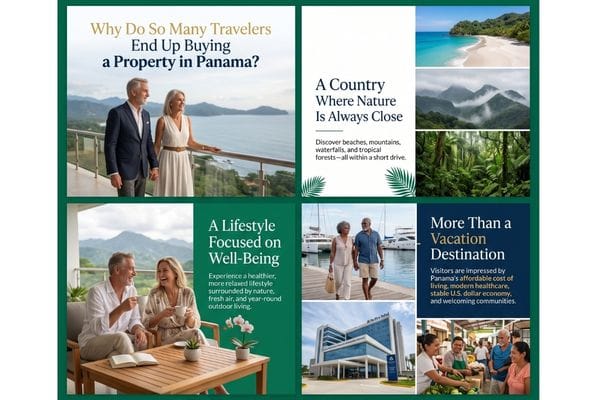
Panama has long attracted retirees and expatriates from North America thanks to the use of the U.S. dollar, international air connectivity, private healthcare options, tropical climate and diverse real estate markets. But lifestyle considerations are only one part of a relocation decision — the immigration structure should also fit the retiree’s financial circumstances. A retiree with US$300,000 available for housing has a very different planning situation from an investor with US$1 million in liquid assets, and understanding what $500,000 actually buys in Panama can help frame that decision.
How Much Money Do You Actually Need to Move to Panama?
The amount depends on at least three components: capital allocated to residency (varies by immigration category), capital allocated to housing (does not necessarily need to consume all available capital), and financial reserves (retained for living expenses, emergencies and future investments). For example, someone with US$400,000 available may prefer to invest US$300,000 in qualifying real estate and retain US$100,000 as a reserve, while another investor may prefer to invest US$500,000 and pursue the Qualified Investor route for a resale property.
Why You Should Choose the Immigration Strategy Before the Property
One of the most important practical lessons for international buyers is simple: do not start with the property, start with the residency strategy.
- Determine your immigration category — review nationality, family situation, financial resources, income, age and intended purpose of residence.
- Determine the investment structure — identify whether the applicable route requires real estate, a fixed-term deposit, or a combination of investments.
- Establish your investment budget — determine how much capital you are comfortable committing.
- Search for properties — only after understanding the applicable requirements.
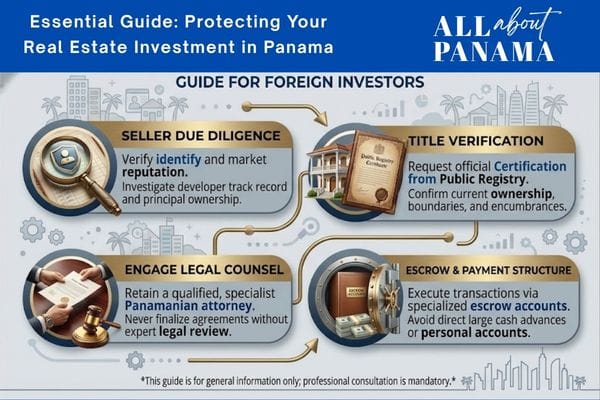
- Conduct legal due diligence — confirm the transaction satisfies the applicable requirements before signing or transferring funds.
This approach can help prevent a costly mistake: purchasing a property that does not actually meet the requirements of the residency category the buyer intended to use.
Frequently Asked Questions About Panama Residency by Investment
Do I need US$500,000 to get residency in Panama?
No. The US$500,000 requirement applies to certain secondary-market real estate investments under the Qualified Investor Program. Panama has other residency categories with different requirements.
Can I get Panama residency by buying a US$200,000 property?
There may be a pathway through an applicable category such as Friendly Nations, provided the applicant meets all relevant requirements. The property price alone does not guarantee residency.
What is the Friendly Nations Visa in Panama?
A residency category available to citizens of qualifying countries who meet Panama’s applicable immigration requirements. It can provide an alternative to higher-investment residency programs for eligible applicants.
Can I still obtain residency through a US$300,000 property?
Potentially, depending on the category and property type. Under the Qualified Investor Program, US$300,000 applies to certain qualifying first-sale properties, while secondary-market properties require US$500,000.
Is Panama residency permanent immediately?
Not every category follows the same process. Some pathways include a provisional or temporary residency stage before permanent residency, while others have different structures.
Should I buy a property before applying for residency?
Generally no. The immigration strategy should be established before purchasing the property, since its price, type and transaction structure may affect whether it satisfies the intended residency category.
This article is for general informational purposes and does not constitute legal or immigration advice. Requirements and regulations can change; before investing or submitting an application, confirm current requirements with the National Immigration Service of Panama and a qualified Panamanian immigration attorney.
Sources: National Immigration Service of Panama; Official Gazette of Panama — Executive Decree No. 17 of September 8, 2026, published September 16, 2026.
Exploring a residency strategy built around lifestyle, not just a threshold? Discover Altos del María and see how a mountain-community property could fit your investment and residency plan.