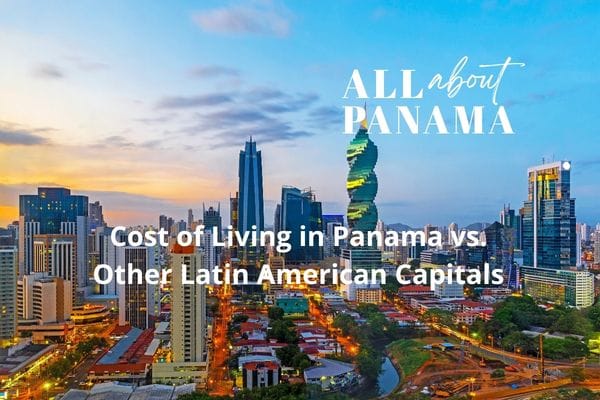
How much does it really cost to live in Panama? This is one of the first questions asked by retirees, expatriates, long-term travelers and foreign investors considering Panama as a place to live, invest or establish a second home. Panama City has become an increasingly attractive destination for people looking for a combination of international connectivity, modern infrastructure, tropical living and investment opportunities. But before making a decision, it is important to understand how the cost of living in Panama compares with other major cities in the region.
A comparison based on data from Numbeo, one of the world’s largest collaborative cost-of-living databases, provides an interesting snapshot of how Panama City compares with Bogotá, Guatemala City, Rio de Janeiro, Mexico City, San José and Miami across rent, restaurants, transportation, utilities, sports and leisure, clothing and groceries. The overall picture is interesting: Panama is not necessarily the cheapest city in the region, but its cost structure can be particularly relevant for people considering long-term residence or real estate investment.
Cost of Living in Panama City Compared with Other Cities
For everyday expenses such as food, transportation and clothing, Panama City sits somewhere in the middle of the group analyzed. In some categories, Panama is more expensive than Bogotá or Guatemala City, while other cities such as San José or Mexico City can be more expensive in certain areas. For someone considering relocation, this distinction matters. A realistic monthly budget also includes housing, groceries, transportation, utilities, healthcare, entertainment, sports and leisure, insurance, travel and other lifestyle expenses — particularly important for retirees and expatriates whose income comes from pensions, investments, savings or businesses outside Panama.
Instead of asking only “Where is it cheapest to live?”, a foreign resident may want to ask: “Where can I maintain the lifestyle I want while getting a good combination of infrastructure, services, connectivity and investment opportunities?” That broader perspective can produce a very different comparison between international cities.
Rent in Panama City: One of the Most Important Factors
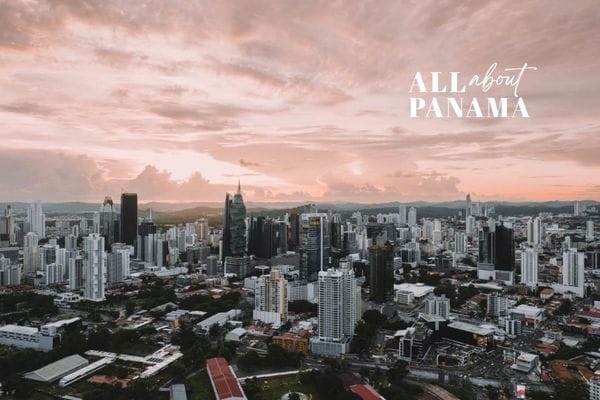
One of the most notable findings in this comparison is the cost of housing. Renting a furnished apartment in a high-demand area of Panama City can be more expensive than renting in the other Latin American cities included in the analysis. This may be surprising to people who still think of Panama primarily as a low-cost destination. Panama City has developed a significant premium residential market, with modern apartment buildings, international restaurants, shopping centers, private services and residential communities. Areas such as Punta Pacífica, Costa del Este, San Francisco and Avenida Balboa offer different lifestyles and housing options, but properties in high-demand locations can command premium rental prices. This means that where you choose to live in Panama can have a major impact on your monthly budget.
Renting vs. Buying Property in Panama
If someone expects to remain in Panama for several years, looking only at monthly rent may not provide the complete financial picture. A proper comparison should consider purchase price, mortgage financing, interest rates, potential rental income, property appreciation, maintenance costs, taxes and transaction costs, location, rental demand and property liquidity. For someone planning to live in Panama long term, purchasing a property can potentially be both a housing decision and a wealth-building decision.
| Factor | Renting | Buying |
|---|---|---|
| Initial investment | Lower | Higher |
| Flexibility | Higher | Lower |
| Asset ownership | No | Yes |
| Potential appreciation | No direct benefit | Potential benefit |
| Maintenance responsibility | Generally lower | Higher |
| Potential rental income | No | Possible |
| Long-term commitment | Lower | Higher |
This does not mean that buying is always better than renting. The appropriate choice depends on the individual’s financial situation, investment horizon, expected length of stay and personal goals. Panama’s mortgage financing rates can be competitive compared with other markets in the region, which makes this a question worth analyzing with a professional rather than assuming one answer fits everyone. Learn more about the broader advantages in our guide to investing in real estate in Panama.
Panama vs. Other Major Cities in the Region
🇵🇦 Panama City combines a dollar-based economy, international air connectivity, modern infrastructure, high-rise residential developments and a strong service economy, with real estate options ranging from urban apartments to beach communities.
🇨🇴 Bogotá can offer lower costs in certain everyday categories, but climate, transportation and lifestyle priorities should also factor into the comparison.
🇬🇹 Guatemala City can also be less expensive in several everyday categories, though its real estate market and international profile differ significantly.
🇧🇷 Rio de Janeiro offers a very different lifestyle proposition, with beaches, natural environment and a major tourism and cultural scene.
🇲🇽 Mexico City is one of Latin America’s largest economic centers, and depending on the category, Panama City may be less or more expensive.
🇨🇷 San José is another established destination for expatriates and retirees, though real estate markets and overall expenses differ from Panama’s.
🇺🇸 Miami is a useful benchmark for American retirees and investors, since many potential Panama residents already understand its real estate and lifestyle environment — often at a different cost structure than South Florida.
Is Panama Expensive to Live In?
The most accurate answer is: it depends on your lifestyle. Someone living in a luxury apartment in a premium neighborhood will have a very different budget from someone living in a less expensive neighborhood and using public transportation. At least four variables should be considered: location (central Panama City, a beach community or a smaller interior city produce very different budgets), housing (renting a premium apartment vs. purchasing in a less expensive area), lifestyle (restaurants, entertainment, sports clubs and travel), and length of stay (a short visit has different priorities than a decade-long relocation, where the rent-versus-buy decision becomes far more important).
Panama for Retirees: More Than Just Cost
For international retirees, cost of living is only one part of the relocation decision. Other important considerations include healthcare access, climate, international connectivity, housing options, transportation, community, banking and financial services, residency options, and proximity to family. Panama can appeal to retirees who want to combine tropical living with modern urban infrastructure and an established international community — a fit reflected in the country’s Pensionado Residency Program.
Living in Panama While Investing in Real Estate
For some foreigners, the objective is not simply to find a place to live but to acquire an asset that becomes part of their long-term financial strategy. In that case, the analysis should include purchase price, financing, potential rental income, expenses, potential appreciation and liquidity. A property could serve as a primary residence, a second home, a vacation property, a rental property or a long-term investment. This is why anyone considering real estate investment in Panama should analyze individual neighborhoods and properties rather than relying solely on city-wide averages.
What Do the Numbeo Data Actually Tell Us?
Numbeo is a collaborative international database that collects information about prices and living costs in cities around the world. It can be useful for identifying broad cost-of-living differences between cities, but its methodology should be understood: the figures are based on user-submitted information and should not automatically be interpreted as a statistically representative average for an entire city’s population. Anyone making an investment or relocation decision should complement these figures with more specific information about current real estate prices, mortgage rates, rental yields, property taxes, and local market conditions.
Conclusion: What Should Foreigners Consider Before Moving to Panama?
Cost of living is an important starting point, but it should not be the only factor. Before deciding to live or invest in Panama, consider the cost of housing in the specific area you want to live, rent versus purchase prices, food and utility expenses, healthcare access and costs, international connectivity, residency options, the local real estate market, and available financing. The real question is not simply “How much does it cost to live in Panama?” but “What kind of life can I build in Panama, and how can my financial resources support that lifestyle?”
About the data: the cost-of-living information referenced in this article is based on Numbeo, a collaborative international database. Figures can change over time and depend on user contributions, so they should be considered a comparative reference rather than a universal budget. Anyone considering Panama as a place to live, retire or invest should complement this data with current market information and professional advice specific to their circumstances.
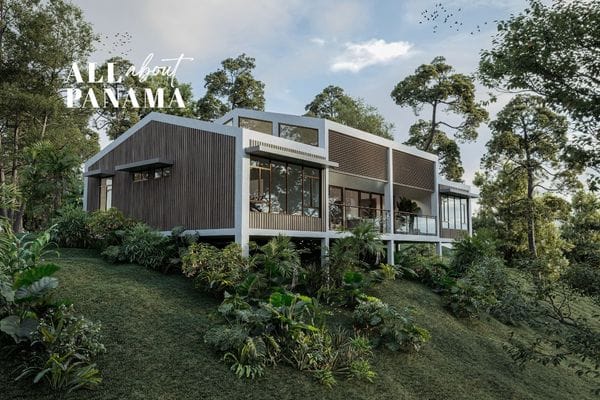
Curious what your money could buy in Panama’s mountains instead of its capital? Explore Altos del María, where the cost per square meter and quality of life offer a different equation altogether.